Five things every young person should confront before entering adult life
Five Things Every Young Person Should Confront Before Entering Adult Life
An ontological reflection for parents considering a gap year
There was a time — not that long ago — when young people did not move straight from school into university, a job, or another conveyor belt of expectations. Before stepping into the responsibilities of adulthood, they were expected to prove themselves to life.
They traveled. They worked. They struggled. They learned who they were when no one was watching.
Modern society has largely removed that rite of passage. We push young people from one institution to the next and then wonder why so many arrive in their twenties uncertain, anxious, and lacking direction.
A well-designed gap year can restore what the old world understood: before a young person builds a life, they must first build themselves.
At its core, this is not about adventure or time off. It is about ontology — the study of being.
It asks a deeper question:
Who is this young person becoming?
There are five fundamental areas every young adult should encounter before stepping fully into the world.
⸻
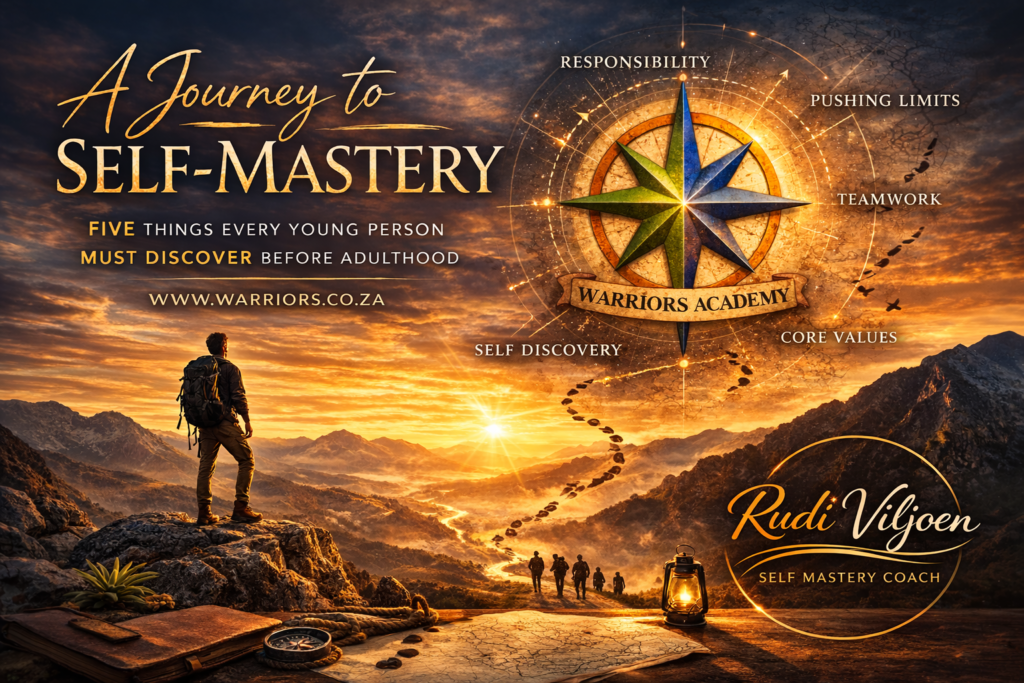
- Learning Responsibility for One’s Own Life
A young person eventually reaches a moment where excuses stop working.
Not parents.
Not teachers.
Not circumstances.
Just me.
Ontologically, this is the shift from living as a reactive being to becoming a responsible creator of one’s life.
Many young people intellectually understand responsibility, but they have never experienced it fully. When they are placed in environments where their actions have real consequences — where teamwork matters, where discipline is required, where their choices affect others — something begins to change.
Responsibility stops being a concept and becomes part of their identity.
⸻
- Discovering Personal Limits — and Moving Beyond Them
Comfort has become the default setting for modern youth.
But human beings have always grown through challenge.
Physical hardship.
Uncertainty.
Adventure.
Problem solving under pressure.
When a young person climbs a mountain, navigates unfamiliar terrain, or faces a demanding challenge, they encounter something profound:
They discover the difference between what they thought they were capable of and what they actually are capable of.
That moment reshapes their relationship with themselves.
Confidence that comes from achievement is fundamentally different from confidence that comes from praise.
⸻
- Understanding Relationships and Teamwork
No meaningful life is built alone.
Yet many young people arrive in adulthood without ever having truly learned how to work within a team, resolve conflict, or build healthy relationships.
Ontology reminds us that who we are shows up most clearly in how we relate to others.
When young adults live, work, and solve problems together in demanding environments, several things become visible:
• How they handle frustration
• How they contribute to a group
• Whether they lead or withdraw
• Whether they blame or take ownership
These experiences develop emotional maturity far more effectively than any classroom lecture.
⸻
- Clarifying Personal Values
A surprising number of young adults cannot answer a simple question:
What do you actually stand for?
Values are often inherited unconsciously from parents, culture, or peer groups. They are rarely examined intentionally.
But adulthood requires clarity of character.
Integrity.
Respect.
Responsibility.
Contribution.
When young people are exposed to environments that challenge their assumptions and ask them to reflect on their choices, something powerful happens. They begin to shape their own moral compass.
Not because someone told them what to believe, but because they experienced the consequences of their actions.
⸻
- Facing Themselves
Perhaps the most important journey a young person can take is inward.
Beyond skills, adventure, and education lies a deeper question:
Who am I when the noise disappears?
Self-mastery begins when a person becomes aware of their patterns:
• their fears
• their anger
• their insecurities
• their ambitions
Many adults reach middle age without ever examining these parts of themselves.
Young people who engage in structured reflection, guided processes, and personal development begin to develop something rare:
self-awareness.
And self-awareness is the foundation of leadership, resilience, and maturity.
⸻
Why This Matters Now
Parents often ask the wrong question when considering a gap year.
They ask:
“Will this help my child get into university or build a career?”
Those are reasonable concerns.
But the deeper question is:
Who will my child become before stepping into that career?
The world does not simply need more graduates.
It needs young adults who know who they are, who can take responsibility, who can lead themselves, and who can contribute meaningfully to others.
A transformative gap year, when done correctly, becomes far more than a pause between school and university.
It becomes a rite of passage.
A period where young people confront challenge, develop character, and discover the foundations of self-mastery that will guide the rest of their lives.
And in a world increasingly filled with distraction and uncertainty, that may be one of the greatest gifts a parent can give their child.
www.rudiviljoen.com
www.warriors.co.za